


There are some foods that don’t immediately win you over by looks alone. They don’t shimmer. They don’t style well on a plate. And they certainly don’t beg to be photographed.
🎧 Prefer listening? This article is available as a podcast episode above.
Antillean callaloo is one of those foods.
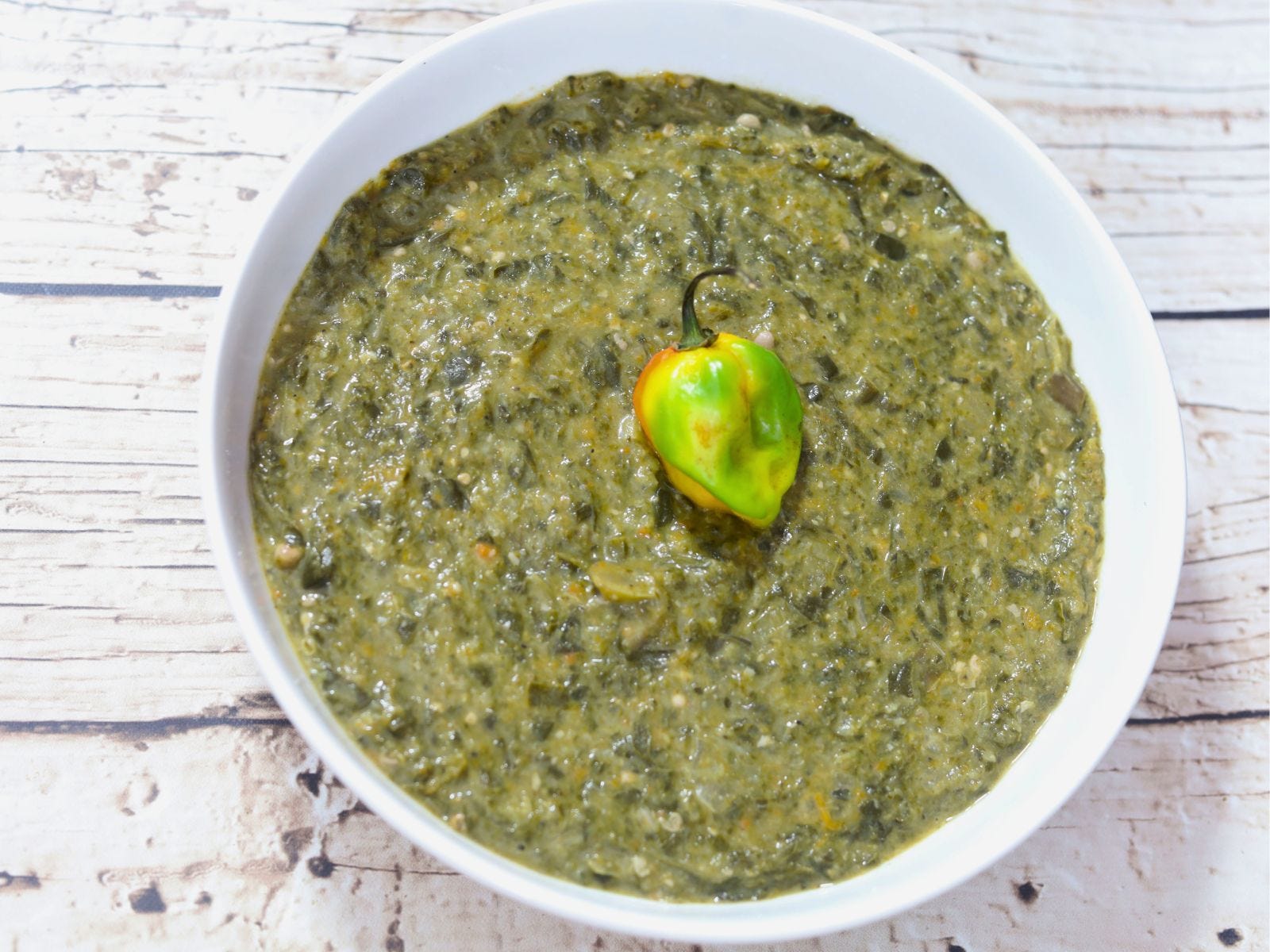
The kind made in Trinidad, Grenada, Dominica, and other Caribbean islands. Thick. Green-grey. Gloopy. Slimy. A dish that, at first glance, might make you pause before picking up your spoon.
But here’s the thing about callaloo: once you taste it, something clicks. There’s an amalgamation of flavors so deep and comforting that it feels familiar, even on the very first bite. Maybe that familiarity only exists for Caribbean people—or for those of the African diaspora. Or maybe it’s something anyone can feel when food carries history.
Let’s make sure we’re on the same page.
This is not Jamaican callaloo, which is made from the leaves of the amaranth plant. And it’s not kalalou, the Haitian word for okra.
I’m talking about this callaloo—the green-grey, thick, almost sludge-like dish that doesn’t care about aesthetics but delivers on soul.
So much of our culinary history comes from making something glorious and delectable out of humble ingredients—ingredients deemed inferior by colonizers and slave masters. Every bite of callaloo reminds me of people taken to new lands across treacherous waters, forced to create new cultures, adapted cuisines, and new traditions under unimaginable circumstances.
In every spoonful lives the sweat of my ancestors cutting sugarcane, harvesting cacao, tending coffee—finding ways to survive, nourish themselves, and build community.
From New Orleans gumbo to Haitian lalo to Trini callaloo, Black people across the Americas have always found ways to create layers of flavor through technique, patience, and aromatics—transforming humble ingredients into dishes that endure.
In modern times, many people denigrate the use of ingredients like cow foot, pickled pig tails, and salted preserved meats. They question why so many dishes of the African diaspora rely on these “less desirable” parts of the animal.
I think it’s incredible.
Incredible ingenuity.
Incredible creativity.
Incredible culinary intelligence.
These are recipes that have stood the test of time, passed down generation to generation, because they are delicious, resourceful, and deeply rooted in history.
Before we dive into how callaloo is made, I should admit something: callaloo and I did not always have the loving relationship we share today.
My story isn’t unique. It’s the story of many Caribbean children—and especially Caribbean-American children—who grew up removed from the mundaneness of callaloo being served as an everyday dish.
Growing up in the U.S., even with Caribbean parents, the sight of that green sludge simmering in a pot filled me with dread as dinner time approached. I avoided callaloo like the plague and didn’t taste it for many, many years.
Who can relate?
It wasn’t until I became deeply immersed in culinary history through my work that I decided to try callaloo again—after nearly two decades of avoiding it. This time, with a deeper understanding of Caribbean history and the displacement of Black people, it tasted different.
I tasted the sun.
The heat.
The warmth of Caribbean people.
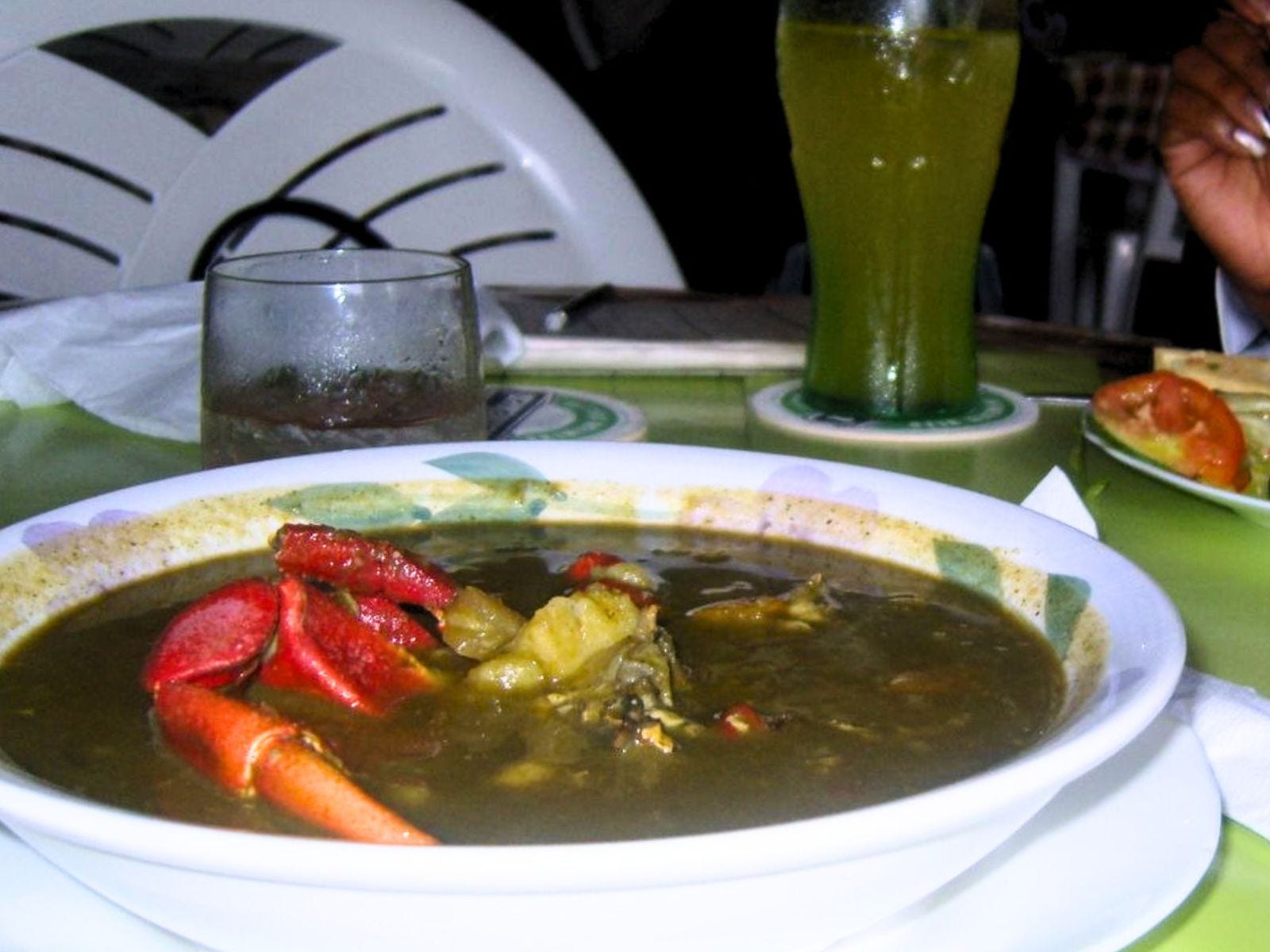
My reintroduction came in Dominica, where I first tried crab callaloo in soup form. Crab Callaloo has since replaced Mountain Chicken as Dominica’s national dish, after the crapaud frog became endangered.
When I returned to the United States, I started making callaloo myself. Today, it’s one of my favorite Caribbean vegetable dishes and often makes an appearance at Sunday dinner.
So what exactly is callaloo, and how did it come to be?
The History of Dasheen in the Caribbean
The primary ingredient in Antillean callaloo is taro leaves—known throughout the Caribbean as dasheen bush. But taro isn’t endemic to the Caribbean, which raises an important question: how did it get there?
In the Caribbean, dasheen is eaten in two forms—the root and the leaves. Along with its smaller cousin eddoe, it’s now a staple across the region. But taro actually originated in Southeast and South Asia, where it’s known as colocasia. It’s believed to have first grown in the wet lowlands of present-day Malaysia.
Through cultivation, taro traveled across the South Pacific, into Egypt and the Mediterranean, and eventually across the African continent from west to east.
Through the forced migration of Africans during the transatlantic slave trade, dasheen was transported to the Caribbean on slave ships in the 16th century. Once planted, it thrived—and for good reason.
Dasheen became popular because:
It requires minimal effort and yields abundantly
It contributes significantly to local economies, particularly in Trinidad, Dominica, and St. Vincent and the Grenadines
It’s rich in essential nutrients
It’s climate-resilient, withstanding flooding during heavy rainy seasons
And there’s minimal waste—both the root and leaves are used
Nutritional Value of Dasheen
Taro leaves are approximately 86% water, with modest amounts of carbohydrates, protein, and fat. They’re especially rich in Vitamin K, providing more than 100% of the recommended daily intake. Vitamin K supports bone health, heart health, and efficient recovery after injury.
Taro root, while low in protein and fat, is energy-dense and rich in essential nutrients. It’s made up of about 64% water and 35% carbohydrates, providing roughly 142 calories per 100 grams. It’s also a good source of Vitamin B6, Vitamin E, manganese, and potassium.
How Callaloo Is Made
No two people make callaloo the same way—so this is my version. If it’s not exactly like your mother’s, that’s okay.
Callaloo typically includes three main ingredients: dasheen bush (taro leaves), okra, and pumpkin. The heart-shaped taro leaves are chopped along with the okra and pumpkin, then combined with flavor-building vegetables and aromatics like celery, carrot, garlic, and thyme.
A Scotch bonnet pepper is added for heat, coconut milk for richness, and everything is stewed low and slow—usually for about an hour.
Some people prefer their callaloo chunky; others like it silky smooth. You can purée half or all of it and return it to the pot for a luscious, creamy texture, or enjoy it rustic as-is.
This version is vegetarian, but additions like crab, pig’s feet, or salted meats are common.
If you’re looking for a Caribbean dish with history in every bite, look no further.
Are you seeing callaloo in a new light?
Are you ready to try it?
Maybe it didn’t look appealing before—but now, maybe you’re ready to decolonize your plate.
Chef Mireille is a classically trained chef who writes content around international food, recipes, travel and culture. Find over 1000 recipes from around the world on her website at globalkitchentravels.com


